
The short answer
Use visible overflow, debris and the condition of your rainwater system to decide when to ask for an assessment. A routine check is useful, but a leaking joint or damaged gutter may need repair as well as clearance.
Observe safely from ground level
Look for overflow during rain, visible debris and staining below joints without climbing to investigate. Note which elevation and weather conditions show the problem. Historic England’s maintenance checklist includes checking gutters and downpipes and clearing leaves after leaf fall. Treat this as maintenance guidance; a provider still needs to assess your particular system and any access restrictions.
Describe the symptom precisely
“The rear gutter overflows near the extension during heavy rain” gives a cleaner more information than “gutters need doing”. Send a wide view and a photograph of the affected area from a safe position. Mention previous repairs or a recurring blockage. Do not assume debris is the only cause: the enquiry may need a separate conversation about joints, alignment or defects.
Ask what a clearance will include
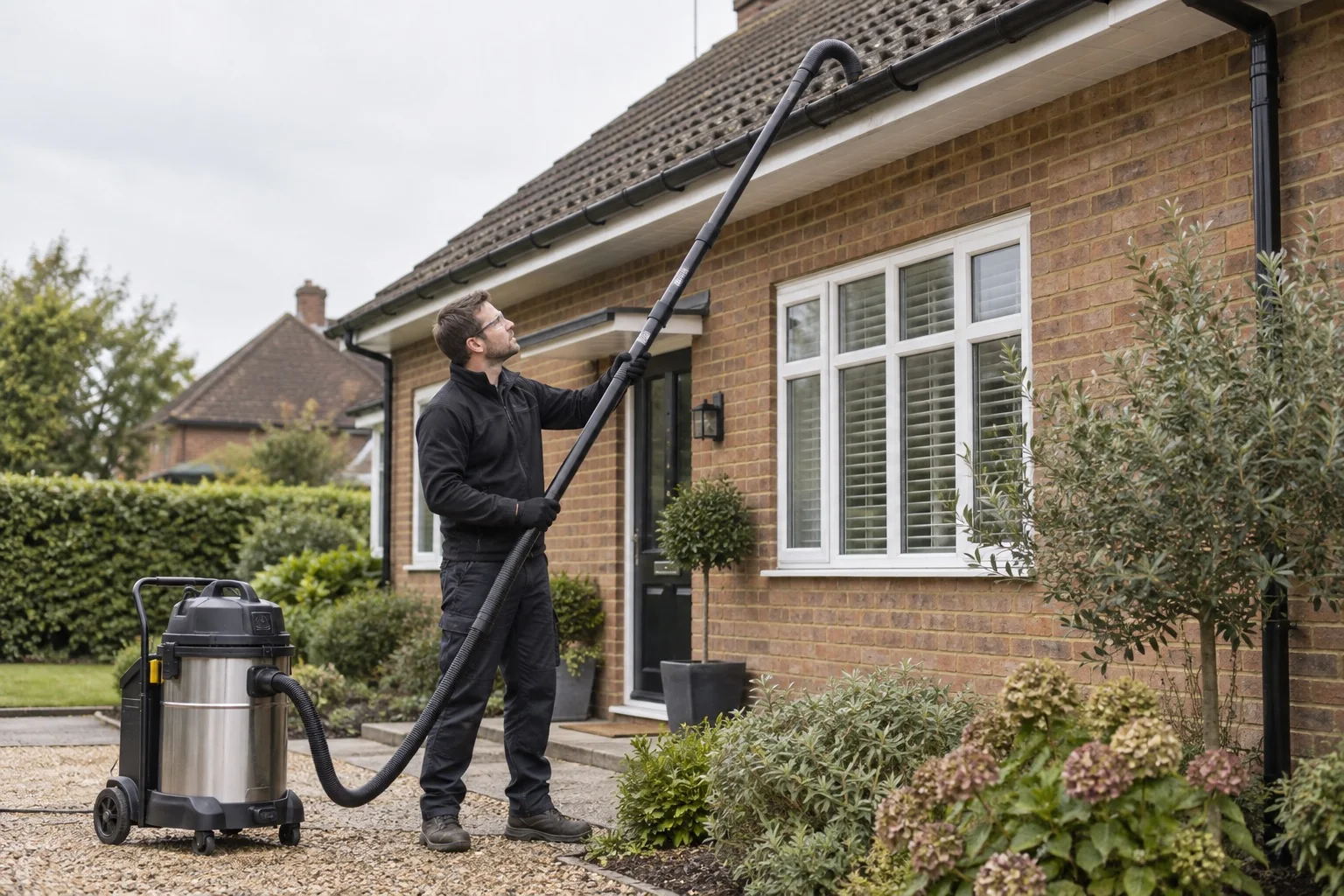
List every gutter run, outlet and downpipe you want checked. Confirm whether the quote covers internal clearance, external washing or both, and whether debris is removed from the property. Ask if before-and-after images will be supplied and how inaccessible sections are handled. A camera image can help show the work but should not be described as a complete building survey.
Set a review plan for your home
Discuss future checks in light of the provider’s observations and what you see between visits. Ask what changes should prompt another enquiry. If repair is recommended, request an explanation and separate scope before agreeing. Save the completion information so the next provider can understand where the issue occurred and what was done.
Sources & further reading
Sources checked 2026-09-13. Statistics retain their original reference year.