
The short answer
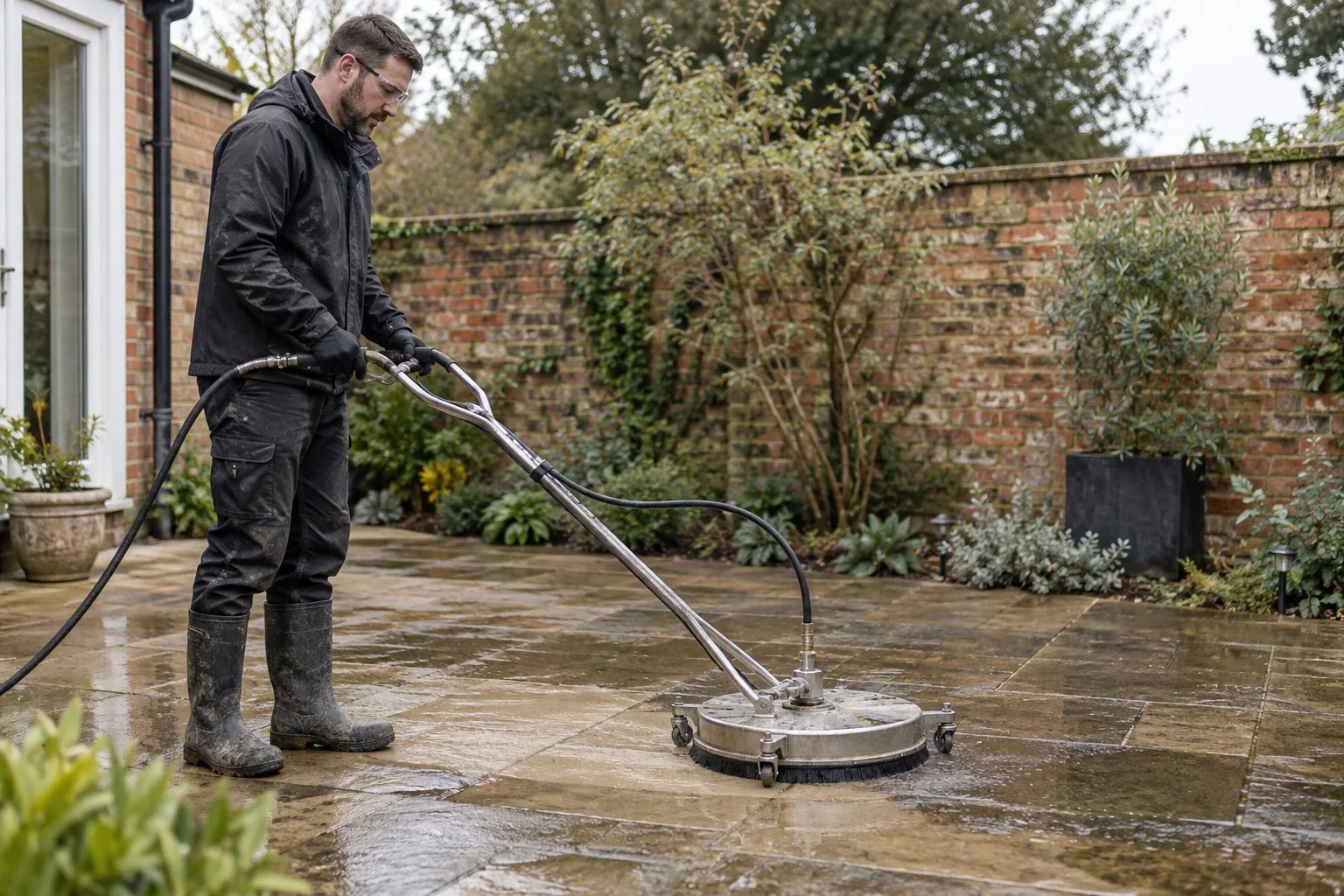
Compare the whole job: identifying the surface, choosing a suitable method, controlling the work and leaving an agreed finish. Owning or hiring a pressure washer does not establish that pressure washing suits the surface.
Start with suitability
Find the care instructions for the material or installed system and look at its existing condition. Loose joints, damaged finishes and unknown coatings need attention before you choose a method. A pressure setting copied from another surface is not a reliable specification. If you cannot establish compatibility, ask a provider to assess the job and explain the proposed approach.
Include the work around the washing
Consider moving furniture, creating safe access, protecting adjacent surfaces, handling debris and any finishing work. Ask who is responsible for each task in a professional quote. For a DIY option, account for equipment, compatible supplies and the time to complete and clear up the whole job. A hire price and an itemised finished-job quote describe different amounts of work.
Know when to ask for assessment
High or difficult-to-reach surfaces, roof work and uncertain building materials should prompt a discussion about access and suitability. HSE’s window-cleaning guidance sets out the need to assess risks where work at height is involved. Do not try to create access by climbing or leaning out to take photographs. Supply ground-level views and let the provider explain what further inspection is needed.
Compare outcomes honestly
Ask what result is expected, what marks may remain and how existing defects will be recorded. A quote should describe the surfaces, method, waste and aftercare. If you decide to use a provider, compare their cleaning amount plus the marketplace booking fee as the full customer total. Keep optional jointing, sealing or repairs clearly separated so the choice reflects the job you actually want.
Sources & further reading
Sources checked 2026-09-13. Statistics retain their original reference year.