
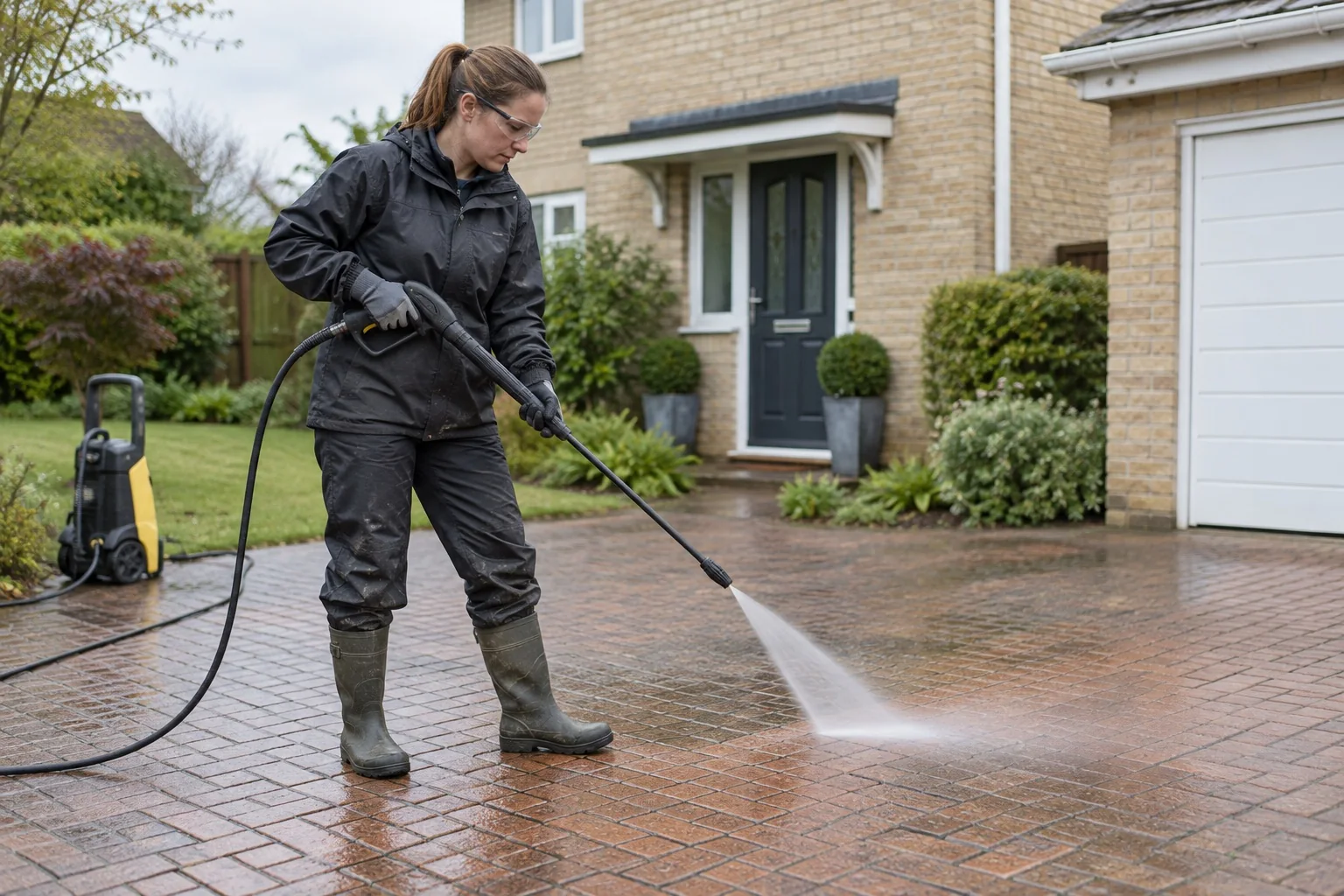
The short answer
Cleaning, joint maintenance and sealing are separate decisions. Identify the paving system and condition, then ask which finishing work is appropriate and whether it is included in the cleaning price.
Identify the paving and its joints
Send photographs of the blocks, joints, edges and any movement or gaps. Share installer or manufacturer details where available. Permeable and conventional paving systems can have different maintenance requirements, so appearance alone is a poor specification. Marshalls publishes aftercare guidance for its paving; use the relevant product instructions as a starting point for the provider’s assessment.
Ask what happens to the joints
A clean may expose existing gaps or make joint condition more apparent. Ask the provider to explain any joint maintenance proposed, the material to be used and why it suits the system. Do not assume all block paving should receive the same sand or that a cleaning quote includes replenishment. If a later visit or particular surface conditions are needed, include those in the written scope.
Treat sealing as an optional specification
Ask why sealing is recommended, whether the surface and any previous treatment are compatible, and what finish to expect. Establish preparation, application, future maintenance and restrictions on using the drive. A sealer is not a substitute for repairing loose or defective paving. Compare a cleaning-only option with any appropriate finishing option so you can choose deliberately.
Compare the finished job
Check whether the price includes stains, edges, waste, joints and return visits. Ask what happens if the surface cannot be finished on the cleaning day. The useful comparison is the agreed final condition and the full customer total, including the marketplace booking fee, rather than a washing rate that omits the work needed afterwards.
Sources & further reading
Sources checked 2026-09-13. Statistics retain their original reference year.